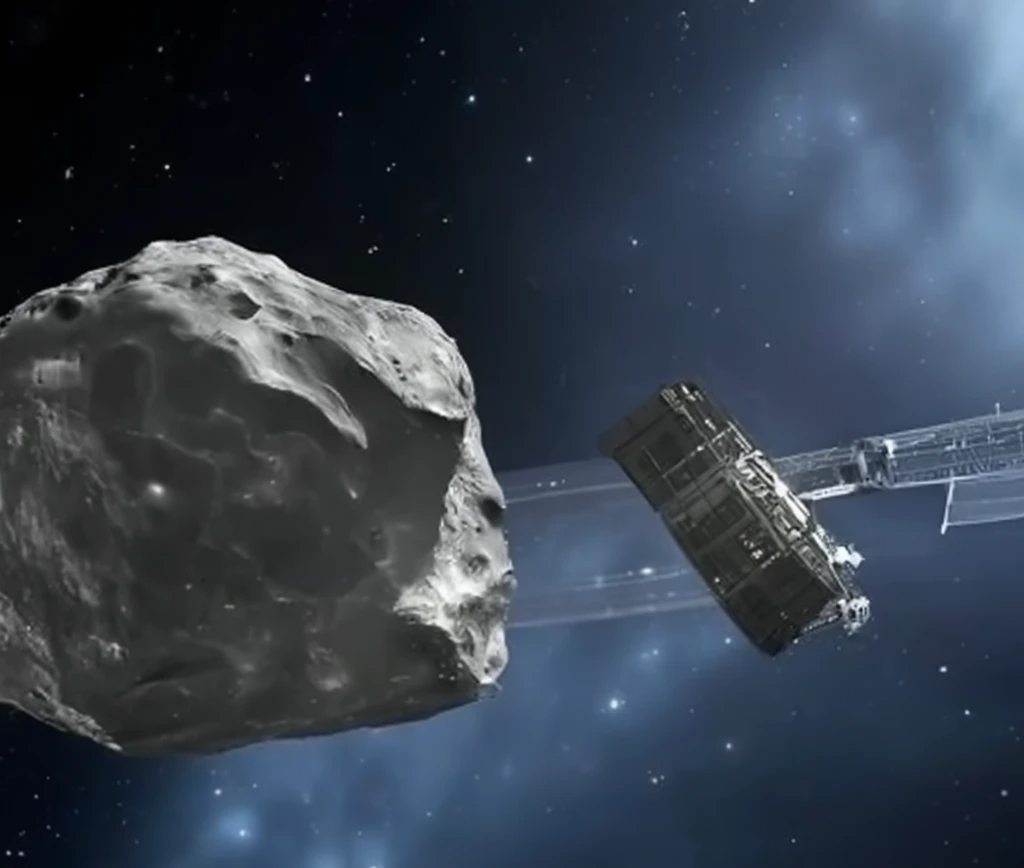
I-T-P-O-W-P-D_cover


Is it Really Possible to Overcome the Wave-Particle Duality?


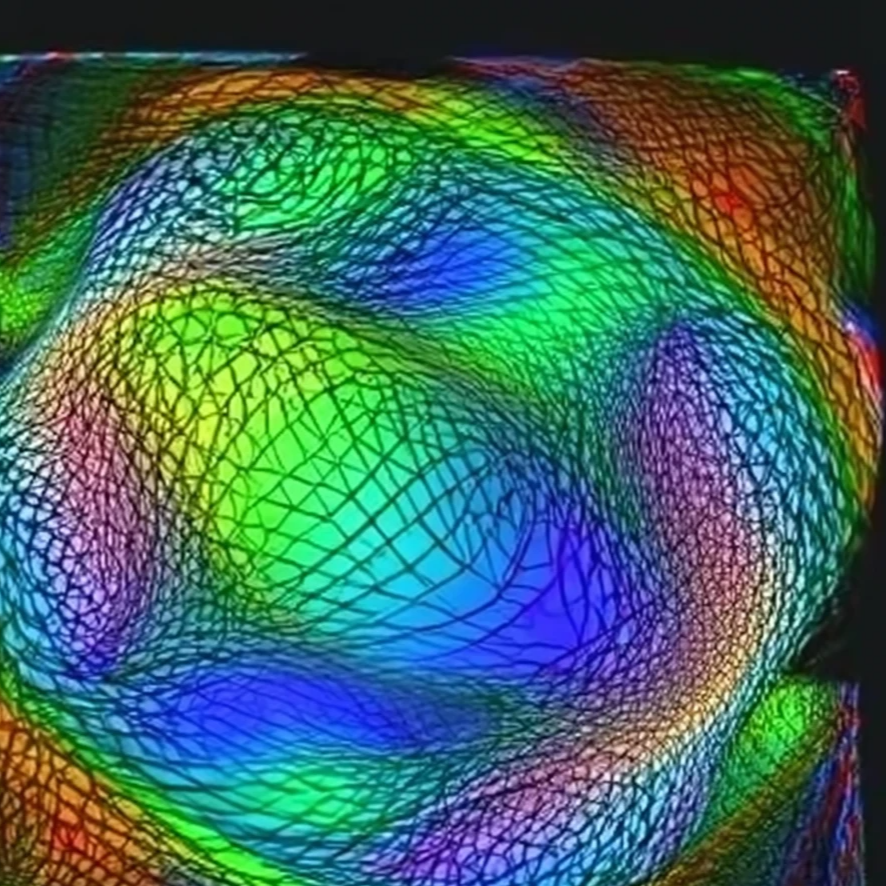
Undoubtedly, at the dawn of Quantum Theory birth there is the comparison between the David Bohm's Deterministic Interpretation, with hidden variables, and the Schrödinger and Born Probabilistic Paradigm, which introduces the Wavefunction, 𝜓 as a representation of a physical system's state (Figure 1).


Towards a Unified Quantum Mechanics Theory


In the last years, a Unified Quantum Mechanics framework has been proposed, consisting of a comprehensive analysis of the Wave–Particle Dynamics of quantum particles. The conventional wavefunction, [math]\Large{\psi}[/math] (Figure 2) is redefined in terms of real scalar [math]\Large{{R}_0}[/math] and vector [math]\Large{\vec{R}}[/math] functions, shedding light on the intrinsic nature of quantum particles. The resulting expression unveils a dual composition of massless and massive fields within the particle, with the scalar [math]\Large{{R}_0}[/math] and vector [math]\Large{\vec{R}}[/math] functions satisfying the Quantum Telegraph Equation (Equation 1) [1] and the phase, [math]\Large{S}[/math] representing a massless field.

The interaction between these three functions is investigated, revealing intriguing connections. Notably, the product
[math]\Large{S \cdot {R_0}}[/math] satisfies the telegraph equation, representing the potential energy of the particle field, while [math]\Large{S \cdot {\vec{R}}}[/math] signifies its momentum. This article explores scenarios where the particle exhibits fluid-like (wave) behavior, characterized by a conserved Energy–Momentum Tensor, [math]\Large{{\sigma_{ij}}^m}[/math] (further information in here, Section 1) (Equation 2).


[math]\LARGE{ - {\tau\hbar}{{\partial^2\psi} \over {\partial t^2}} + {i\hbar} {{\partial\psi} \over {\partial t}} = - {{\hbar^2} \over 2m} \Delta\psi}[/math]


[math]\Large{ - {\tau\hbar}{{\partial^2\psi} \over {\partial t^2}} + {i\hbar} {{\partial\psi} \over {\partial t}} = - {{\hbar^2} \over 2m} \Delta\psi}[/math]


Equation 1.   The mathematical general form of the Quantum Telegraph Equation

  • [math]\Large{\tau}[/math]          is a Time-dimension Parameter;

  • [math]\Large{\hbar}[/math]          is the Planck Constant;

  • [math]\Large{\psi}[/math]         is the three-dimensional Electron Wavefunction;

  • [math]\Large{t}[/math]           is the Time coordinate;

  • [math]\Large{i}[/math]           is the Imaginary Number;

  • [math]\Large{m}[/math]       is the Electron Mass;

  • [math]\Large{\Delta{\psi}}[/math]   is the Electron Wavefunction three-dimensional Espansion;

  • [math]\Large{v_p}[/math]       is the Phase Velocity;

  • [math]\Large{p^{\infty}}[/math]    is the Phase at high-frequency ([math]\Large{\omega}[/math]) limit;


Furthermore, Bohmian Mechanics can be incorporated into the Dirac Equation, resulting in a relativistic Hamilton – Jacobi Equation and a Continuity Equation. The new formalism eliminates the conventional quantum potential energy, providing a fresh perspective on Quantum Mechanics. Application of the Bohmian Method to Maxwell's Equations demonstrates the Particle–Wave Duality [2] of the electromagnetic field. It can also be established that when the electromagnetic field behaves as matter, it resembles a massless Dirac particle, supporting the de Broglie Hypothesis [3]. 


[math]\LARGE{{{\sigma_{ij}}^{m}} = { - {\vec{R}_i}{\vec{R}_j} + {\delta_{ij}}{\Biggr({{\vec{R}^2} \over {2}} - {{\vec{R}_0}^2 \over {2{c_{0}}^2}}\Biggl)}}}[/math]


[math]\large{{{\sigma_{ij}}^{m}} = { - {\vec{R}_i}{\vec{R}_j} + {\delta_{ij}}{\Biggr({{\vec{R}^2} \over {2}} - {{\vec{R}_0}^2 \over {2{c_{0}}^2}}\Biggl)}}}[/math]


Equation 2.   The Energy-Momentum Tensor mathematical expression


where [math]\vec{R}_i[/math] and [math]\vec{R}_j[/math] are the [math]R[/math] Vector components along the [math]i[/math] and [math]j[/math] arbitrary directions, respectively; while [math]\delta_{ij}[/math] is the Delta Function, which modulates the tensor magnitude.


What about a New Potential Energy?


In the so-called Schrödinger-Bohm Mechanics [4], the motion of a non-relativistic quantum particle in a Potential Energy, V  is described using the Schrödinger Equation. The wavefunction is expressed as:


[math]\LARGE{\psi = {Re^{{iS} \over {\hbar}}}}[/math]


[math]\Large{\psi = {Re^{{iS} \over {\hbar}}}}[/math]


Equation 3.   One of the Electron Wavefunction scalar forms


where [math]\Large{R}[/math] and [math]\Large{S}[/math] are real functions. The resulting equations are analyzed, revealing the dual nature of the particle as both wave and matter. A new potential energy dependent on the phase [math]\Large{S}[/math] is introduced, termed the Phase (Spin) Potential Energy (further information in here, Section 3).


A hybrid Theory of Vector and Scalar Wavefunctions


The Vector Quantum Mechanics represents a free quantum particle with mass, [math]\Large{m}[/math] using scalar and vector wavefunctions [math]\Large{\psi{_0}}[/math] and [math]\Large{\vec{\psi}}[/math], respectively. The quantum telegraph equation governs their evolution, illustrating the fluid-like motion [5] of the particle.

craiyon_174913_express_your_energy_into_forming_a_perfect_mathematical_geometrical_representation_of

Figure 1.   A representative 3-Dimensional Electron Wavefunction Energy Distribution graph


From Bohmian Vector Quantum Mechanics to Relativistic Dirac Equation


The combination of Bohmian Vector Quantum Mechanics to vector quantum mechanics yields to a relativistic Dirac Hamiltonian for massless and massive particles. The Hamiltonian equality implies a dual description of the particle, with all information propagating at the speed of light. The mass of the particle is uniquely determined by its wavefunctions, showcasing the interconnectedness of the fields.


Application to Maxwell’s Equations


The Bohmian approach is further extended to Maxwell's equations, revealing the particle–wave duality of the Electromagnetic Field. The electromagnetic field is expressed as a wave and particle, with the phase [math]\Large{S}[/math] governing the particle dynamics and [math]\Large{\vec{E}_0}[/math] and [math]\Large{\vec{B}_0}[/math] (Electric Field and Magnetic Field in vacuum, respectively, interacting with particle; further information in here, Section 3) representing wave aspects. The Photon, when behaving as matter, resembles a massless Dirac particle, supporting the de Broglie hypothesis.
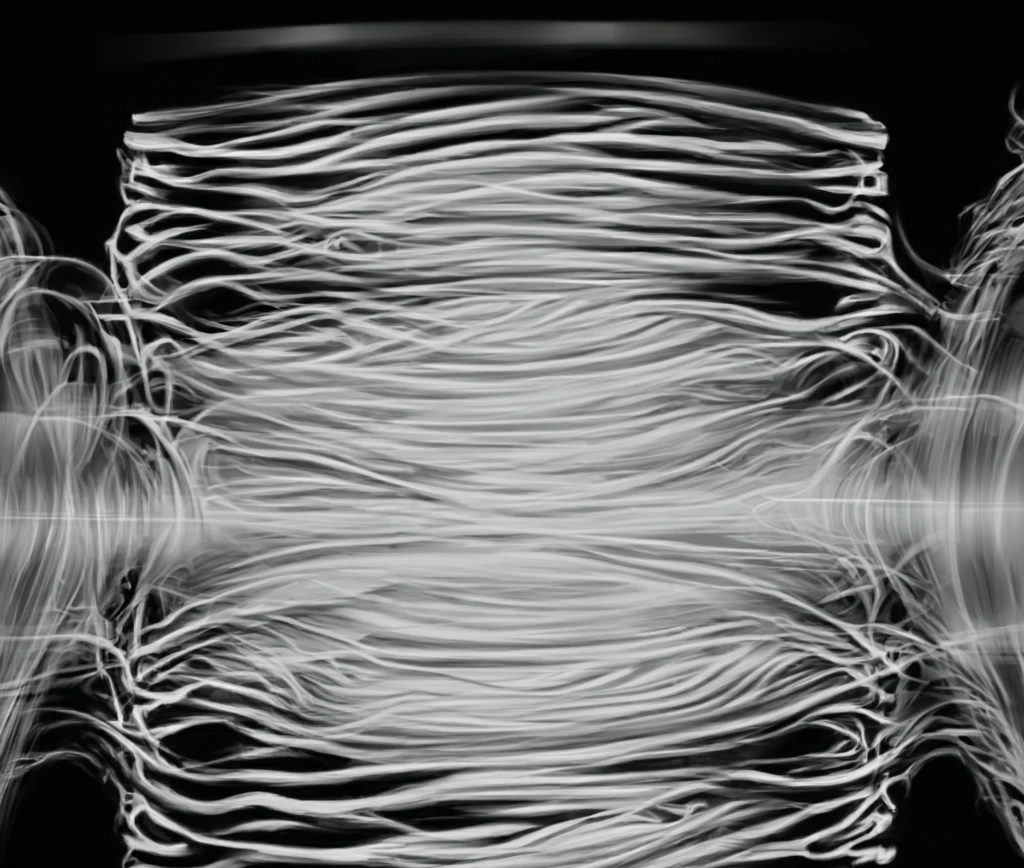

craiyon_174102_detailed_pencil_sketch_of_quantum_wave_function_collapse

Figure 2.   A fountain plan of Electron Wavefunctions Interference


A Delicious Chance to Connect the Matter and Wave features of Particles


The Unified Quantum Mechanics framework highlights the inherent duality and interconnectedness of massless and massive fields within quantum particles. Particularly, the elimination of the quantum potential energy in this new formalism opens avenues for further exploration in quantum theory.


  1. LinkedIn. "Classical and Quantum Wave Equations: A Journey into the Core Concepts"https://www.linkedin.com/pulse/classical-quantum-wave-equations-journey-core-concepts-dadhich/

  2. ScienceDirect.com. "Complementarity, wave-particle duality, and domains of applicability" https://www.sciencedirect.com/science/article/pii/S1355219817301028

  3. ScienceReady.com. "de Broglie's Matter Wave Duality and Experimental Evidence" https://scienceready.com.au/pages/matter-wave-duality

  4. IOPscience. "Is the de Broglie-Bohm interpretation of quantum mechanics really plausible?" https://iopscience.iop.org/article/10.1088/1742-6596/442/1/012060/pdf

  5. Springer.com. "Visualization of hydrodynamic pilot-wave phenomena" https://link.springer.com/article/10.1007/s12650-016-0383-5
T-E-DME-cover


The Effect of Dark Matter and Dark Energy on Gravitational Time Advancement


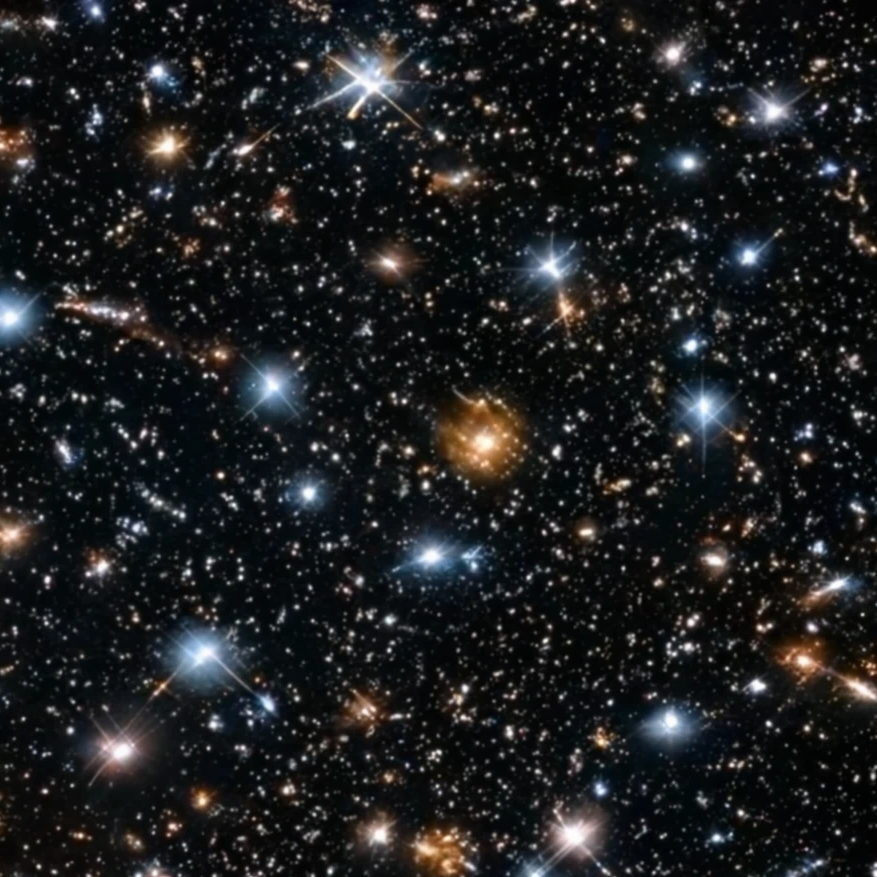
Nowadays, the effects of Dark Matter (Figure 1) and Dark Energy on Gravitational Time Advancement, on local and large distance scales, are quite known. Some research consider various models of dark matter and dark energy, including the Cosmological Constant, Λ and compares their impact on gravitational phenomena with the standard Schwarzschild Geometry (Equation 1).


Beyond the Standard Theories...


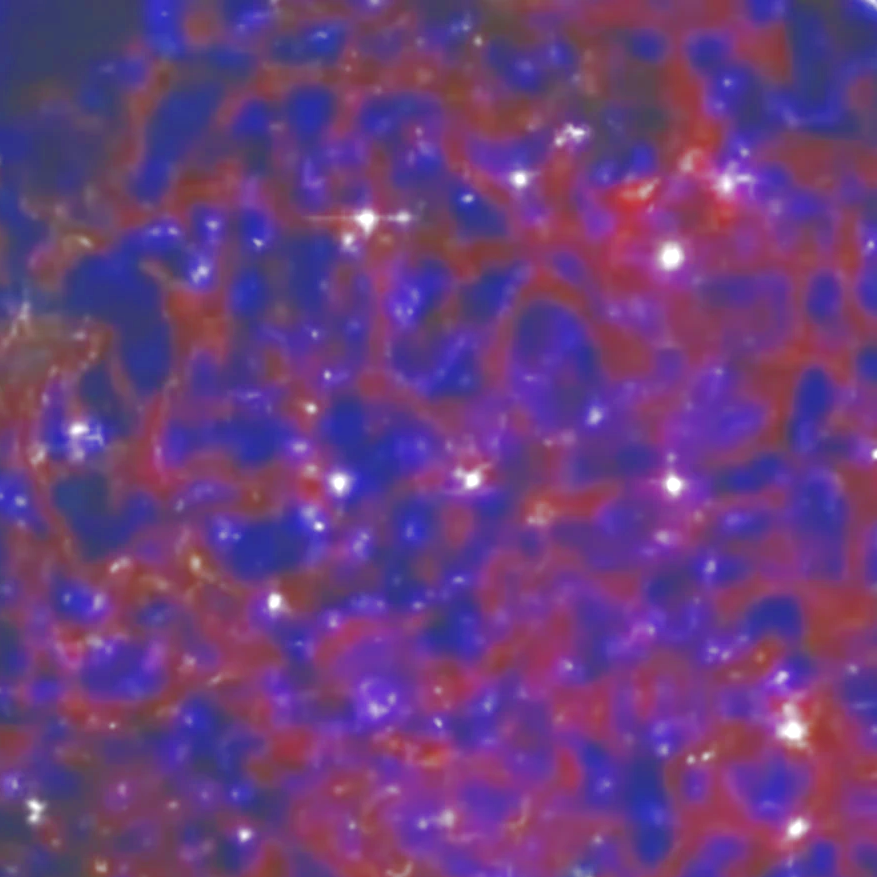
Postulating the acceleration of the Universe's expansion, the latest advancements led to the inclusion of dark energy, characterized by a negative pressure, into the Energy - Momentum Tensor, Tik of the Universe. Dark matter, a non-luminous component dominating galaxies, is supported by observations such as rotation curve surveys, cosmic microwave background (Figure 2) measurements [1], and baryon acoustic oscillations [2]. 


[math]\Large{ds^2 = - \Biggl( - 1 - {2\mu \over r}\Biggr) dt^2 + \Biggl(1 - {2\mu \over r}\Biggr)dr^2 + {r^2 \over d\Omega^2}}[/math]


[math]\small{ds^2 = - \Biggl( - 1 - {2\mu \over r}\Biggr) dt^2 + \Biggl(1 - {2\mu \over r}\Biggr)dr^2 + {r^2 \over d\Omega^2}}[/math]


Equation 1.   The Schwarzschild Geometry equation

With:


[math]\Large{\mu = {{G \cdot M} \over {{c_0}^2}}}[/math]

With:


[math]\large{\mu = {{G \cdot M} \over {{c_0}^2}}}[/math]

  • [math]\Large{\textit{s}}[/math]        is a spherical Surface;

  • [math]\Large{\mu}[/math]       is the Schwarzschild Radius;

  • [math]\Large{G}[/math]      is the Gravitational Constant;

  • [math]\Large{M}[/math]    is the body Mass;

  • [math]\Large{c_{0}}[/math]     is the Light Speed in Vacuum;

  • [math]\Large{\textit{r}}[/math]        is the Radial Coordinate;

  • [math]\Large{\textit{t}}[/math]         is the Time Coordinate;

  • [math]\Large{\Omega}[/math]      is a Point on the two sphere [math]\Large{{\textit{S}} \hspace{0.1cm} ^2}[/math];


Dark Energy and Dark Matter Models


The first and important candidate for dark energy is the cosmological constant, characterized by a constant Energy Density with an Equation-Of-State Parameter, w  equal to -1. However, its theoretical problem lies in its size, significantly lower than the expected Vacuum Energy Density. Various alternative theories, including Quintessence [3]  and Chaplygin Gas Models, (CG) [4] have been proposed to address this issue. Modifications to General Relativity, such as scalar tensor theories and [math]\Large{f(R)}[/math] gravity models, have also been suggested to explain late-time accelerated expansion with no reference to dark energy.


First_image_of_GeoCities_taken_from_space__HD_4k

Figure 1.   A figurative representation of Cosmos objects (white lights) surrounded
by Dark Matter lattice (red and blue structure)


Similarly, dark matter candidates include WIMPs [5], Axions, and sterile Neutrinos (further information in here, section 1). Theories like MOND propose modifications to Newtonian Dynamics, while Conformal Gravitational Theory [6], based on Weyl Symmetry, aims to explain flat rotation curves of Galaxies without the need for dark matter.


What is the Gravitational Time Advancement?


Gravitational Time Advancement occurs when an observer is in a stronger gravitational field compared to the photon's trajectory. A study finds that dark energy leads to a gravitational time delay, reducing the gravitational time advancement effect. In contrast, the conformal theory suggests a large time advancement effect, particularly at distances beyond approximately 30 kpc (Kiloparsec).


Small_ground_station_satellite_antenna_milky_way_background_photo_real

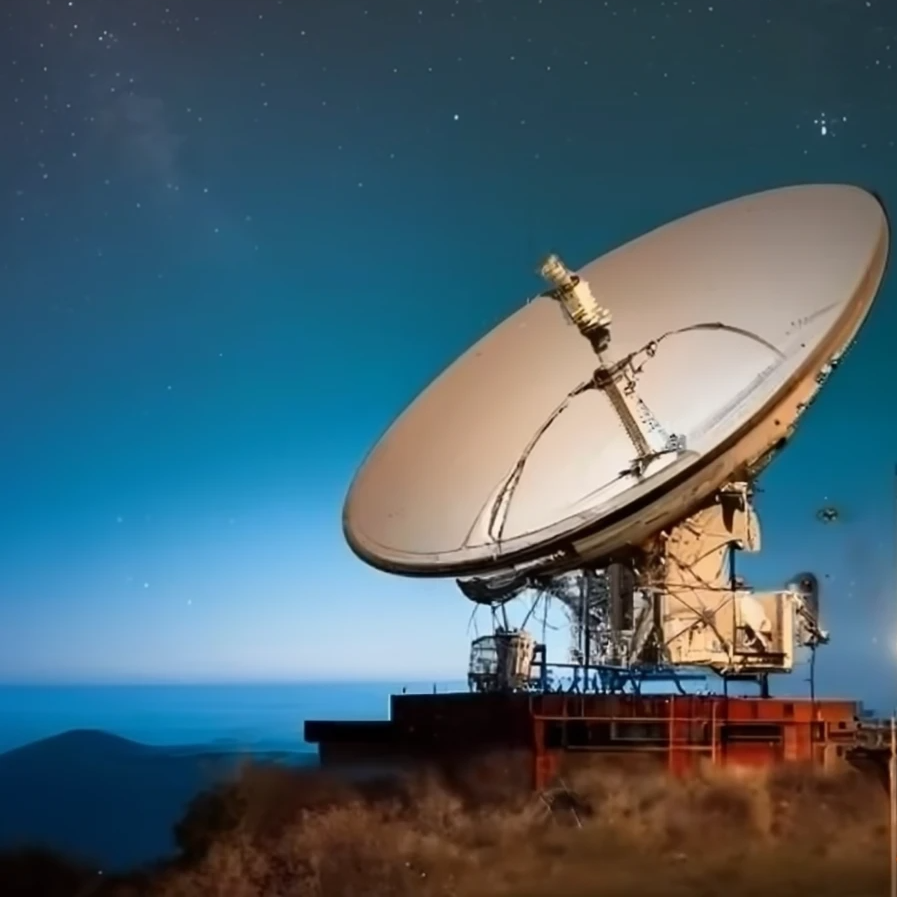
Figure 2.   An instance of small ground station satellite antenna to pick up
the Milky Way Microwave Background


Experimental Verification and Future Missions


This article emphasizes the challenging nature of experimentally verifying the gravitational time advancement effect. BEACON [7] and GRACE-FO [8] missions are expected to provide a higher accuracy in probing the Earth's gravitational field, offering opportunities to measure gravitational time advancement effects at large distances.


Gravitational Time Advancement as a Proof of Dark Matter and Dark Energy


However, analytical expressions are derived, revealing that dark energy induces a gravitational time delay, while the Schwarzschild Metric results in both time delay and time advancement effects. The findings suggest that measuring gravitational time advancement at large distances could serve as a means to prove the dark matter and certain dark energy models. Also parameters, on upper bound conditions, will be affected by this gravitational phenomenon.


  1. Space.com. "What is the cosmic microwave background?"https://www.space.com/33892-cosmic-microwave-background.html

  2. Nasa (.gov). "Baryon Acoustic Oscillations - Roman Space Telescope" https://roman.gsfc.nasa.gov/BAO.html

  3. Cerncourier.com. "The quintessence of cosmology" https://cerncourier.com/a/the-quintessence-of-cosmology/

  4. Academic Accelerator. "Chaplygin Gas: Most Up-to-Date Encyclopedia, News & Reviews" https://academic-accelerator.com/encyclopedia/chaplygin-gas

  5. Arstechnica. "No WIMPS! Heavy particles don’t explain gravitational lensing oddities" https://arstechnica.com/science/2023/04/gravitational-lensing-may-point-to-lighter-dark-matter-candidate/

  6. Physics.wustl. "Quantum Conformal Gravity" https://physics.wustl.edu/events/quantum-conformal-gravity

  7. ResearchGate. "A Search for New Physics with the BEACON Mission" https://www.researchgate.net/publication/1732985_A_Search_for_New_Physics_with_the_BEACON_Mission

  8. Forbes. "NASA's GRACE-FO Mission Will Study How Earth's Climate Is Evolving" https://www.forbes.com/sites/jesseshanahan/2018/05/22/nasas-grace-fo-mission-will-study-how-earths-climate-is-evolving/


M-T-O-F-S-T-T_cover


Many types of Fuels for Space-Time Travels


craiyon_212214_A_spaceship_refueling_with_liquid_hydrogen_in_deep_space

Figure 1.  A Spaceship refueling with liquid Hydrogen (LH2) in deep Space


Overview of different Fuel types for Space-Time Travel

You'll need different fuels for different things. LH2 is really too bulky for most air-breathing aircraft, but it's a waste to operate nuclear rockets on anything else, and spaceplanes almost require it for cooling and combustion speed (Figure 1). Methane is a much better launch vehicle fuel due to its density, which makes tanks far smaller and improves thrust density. And any decently developed industrial base will allow production of heavier hydrocarbons, for example by the Fischer-Tropsch process. And then there's various room-temperature chemical fuels and ion thruster propellants [1].

That’s good for planet Earth, especially when compared with rocket launches that rely on a popular alternative: Kerosene-based propellant. In the case of SpaceX, a single Falcon 9 flight emits about 336 tons of Carbon Dioxide—the equivalent of a car traveling around the World 70 times—according to John Cumbers, a former NASA synthetic biologist and CEO of SynBioBeta [2].


Advantages and Disadvantages of each Fuel Type

Whilst liquid fuels present disadvantages such as the potential for hazardous spills or leaks, one of the biggest issues discovered with such fuels is the relatively complex design, with an increased likelihood of things going wrong. If the liquid substance is cryogenic the fuel cannot be stored for long, and so the foundations for cryogenic storage facilities must be set up at the launch site. This is an area where Skyrora stands out from market competitors, with the propellants of our Skyrora XL vehicle designed to be stored for a longer launch window which is crucial for UK launches where weather conditions make go-for-launch difficult [3].

Pros
: Thirty-percent better fuel economy than an equivalent gasoline vehicle, widely available, lower cost premium than for hybrid vehicles, engines deliver lots of torque for a given displacement, and any Diesel car can run on a blend of renewable Biodiesel fuel. With effort and investment, older diesel engines can be converted to run on pure waste vegetable oil (Figure 2).

Cons: Traditionally more engine noise and vibration. Additional emissions equipement drives up vehicle prices, which along with currently higher cost of Diesel fuel takes a big bite out of any savings. Most clean diesels require refills of Urea solution. Manufacturers won't warranty Biodiesel blends of more than five-percent of Biodiesel [4].


solar_sail

Figure 2.  A Solar Sail in a Space-Time Travel


Current research and development in Alternative Fuel Sources for Space-Time Travel

Picking up fuel along the way — the Ramjet approach — will lose efficiency as the Space craft's speed increases relative to the planetary reference (Figure 3). This happens because the fuel must be accelerated to the spaceship's velocity before its energy can be extracted, and that will cut the fuel efficiency dramatically [5].

Whilst reusability of rockets benefits science, exploration and human spaceflight – one of the greatest drivers for stakeholders in the global launch segment is the scale and demand for in-orbit assets by industry and economy, fuelled in tandem by the plummeting costs and size of satellites (e.g. CubeSats), instrumentation, and even ride-sharing platform services [6].


warp_drive

Figure 3.  A futuristic Warp Drive spaceship slicing through the Galaxy with neon blue lights


  1. Headed For Space. "Using Liquid Methane As Rocket Fuel – Advantages & Drawbacks" https://headedforspace.com/using-liquid-methane-as-rocket-fuel/

  2. Fortune.com. "Space travel is heating up—and so are rocket fuel emissions. These companies are developing cleaner alternatives to protect earth first." https://fortune.com/2022/12/05/space-travel-is-heating-up-and-so-are-rocket-fuel-emissions-these-companies-are-developing-cleaner-alternatives-to-protect-earth-first/

  3. Skyrora. "Rocket fuel: is it rocket science?." https://www.skyrora.com/rocket-fuel-is-it-rocket-science/

  4. Consumer Reports. "The Pros and Cons on Alternative Fuels." https://www.consumerreports.org/cro/2011/05/pros-and-cons-a-reality-check-on-alternative-fuels/index.htm

  5. Wikipedia. "Spacetravel under constant acceleration" https://en.wikipedia.org/wiki/Space_travel_under_constant_acceleration

  6. Spaceaustralia. "Renewable Rocket Fuels – Going Green and Into Space" https://spaceaustralia.com/feature/renewable-rocket-fuels-going-green-and-space


T-E-F-A-G-L-A cover


The Extraordinary Frontier: A Glimpse into Life on Asteroids


Only Rock Pieces of Scientific Interest...

As humanity's curiosity extends beyond Earth, the possibility of life on asteroids becomes an intriguing subject of exploration. While asteroids are traditionally viewed as barren rocks floating in Space, recent scientific discoveries and advancements in Space exploration have opened up new possibilities. This article delves into the potential for life on asteroids and the exciting prospects that lie ahead.

The Microbial Universe

Scientists have long believed that life may exist in the most extreme conditions, and asteroids are no exception. Recent studies suggest that microbial life forms could potentially survive on asteroids, adapting to the harsh cosmic environment. Microorganisms (Figure 1), known for their resilience, might find a way to thrive in the microgravity and extreme temperatures of these Space rocks. [1]

Asteroid Mining and Its Implications

The growing interest in asteroid mining (Figure 2) has further fueled discussions about life beyond Earth. As Space agencies and private companies eye asteroids for their rich mineral resources, the possibility of encountering extraterrestrial life during mining operations raises ethical and scientific questions. Researchers are actively exploring methods to minimize the impact on potential life forms while extracting valuable resources. [2]


craiyon_174157_a_close_up_view_of_a_microbial_cell_attached_to_a_mineralized_polymer_matrix

Figure 1.  Close up view of a microbial cell attached to a mineralized polymer matrix


The Trojan Asteroids: Potential Havens for Life?

Trojan Asteroids (Figure 3), which share an orbit with a larger celestial body, could offer unique conditions for sustaining life. Scientists hypothesize that these asteroids might have stable environments with consistent temperatures, making them potential havens for microbial life. Future missions aim to study Trojan asteroids to uncover more clues about the potential existence of life in our cosmic neighborhood. [3]

The Water-Rich Asteroids

Water, a fundamental requirement for life as we know it, has been discovered on certain asteroids. These Water-rich asteroids could serve as crucial stepping stones for future human exploration and colonization efforts. The presence of water raises the possibility of sustaining plant life, opening up the potential for a self-sustaining ecosystem. [4]


craiyon_200517_Futuristic_space_stations_situated_in_the_asteroid_belt

Figure 2.  Futuristic space station situated in the asteroid belt


Challenges and Future Prospects

While the concept of life on asteroids is fascinating, numerous challenges must be addressed before confirming its existence. The harsh conditions of Space, radiation exposure, and the lack of a protective atmosphere pose significant hurdles. Nonetheless, advancements in astrobiology, robotics, and Space exploration technologies offer hope for overcoming these challenges in the future. [5]

The Dream Perspective: Living by Floating!

The exploration of life on asteroids represents a thrilling frontier in Space science. As researchers delve into the mysteries of these celestial bodies, the possibilities of finding microbial life, water sources, and stable environments continue to capture our imagination. Whether through scientific missions or the pursuit of asteroid mining, the quest for life beyond Earth is an exciting journey that may redefine our understanding of the Cosmos.


craiyon_204623_Trojan_Asteroids

Figure 3.  A Trojan Asteroid orbiting near a planet


  1. Scientific American. "Hardy Microbes Hint at Possibilities for Extraterrestrial Life." https://www.scientificamerican.com/article/hardy-microbes-hint-at-possibilities-for-extraterrestrial-life/

  2. Space.com. "NASA's OSIRIS-REx lands samples of asteroid Bennu to Earth after historic 4-billion-mile journey." https://www.space.com/nasa-osiris-rex-success-recovery-asteroid-sample

  3. The Planetary Society. "NASA’s Lucy mission: an odyssey to the Trojan asteroids." https://www.planetary.org/articles/what-can-nasa-learn-from-the-trojans

  4. NASA. "NASA’s Bennu Asteroid Sample Contains Carbon, Water." https://www.nasa.gov/news-release/nasas-bennu-asteroid-sample-contains-carbon-water/

  5. SciTechDaily. "NASA’s Psyche Gets Huge Solar Arrays for 1.5-Billion-Mile Journey to Metal-Rich Asteroid." https://scitechdaily.com/nasa-psyche-gets-huge-solar-arrays-for-1-5-billion-mile-journey-to-metal-rich-asteroid/


Scroll to Top